

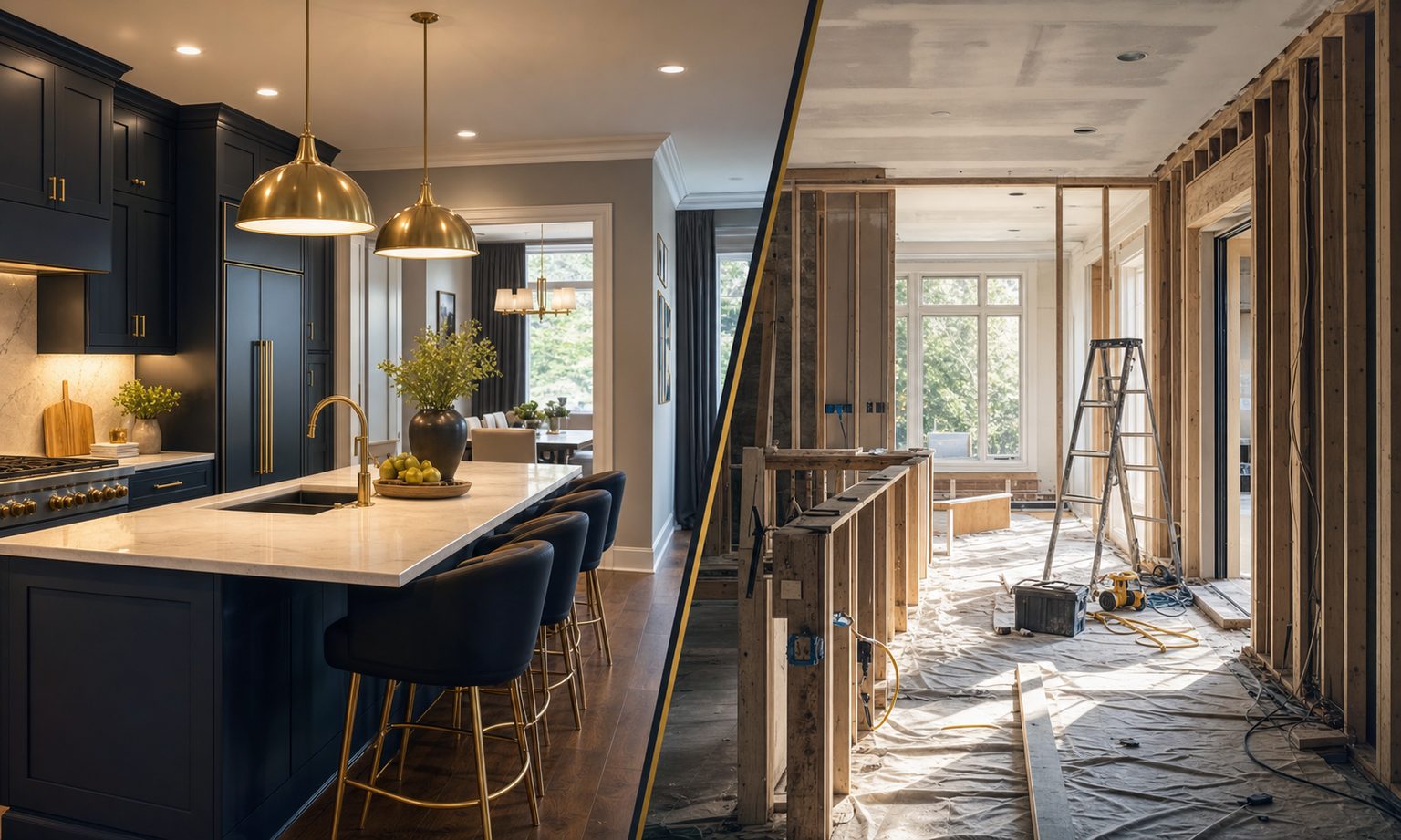
Move-In Ready vs. Fixer-Upper: What's Actually Selling Faster Right Now
In a balanced market, buyers finally have the luxury of choice — and one of the first real forks in the road is this: do you want a home that's ready today, or one you can make your own over time? Both can be smart. Here's how to tell which fits you.
One of the quiet upsides of today's more balanced Washington County market is that buyers finally get to choose. During the frenzy years, you took whatever you could win — condition was almost an afterthought. Now, with more homes on the market and a few weeks to actually think, one of the first real questions we help clients answer is this: move-in ready, or a fixer you can shape over time?
There's no universally right answer. But there's definitely a right answer for you, and it comes down to your budget, your timeline, your tolerance for projects, and where you're buying. Let's break it down honestly.
What's actually selling faster (and why)
Let's start with the market reality, because it shapes both buying and selling decisions.
In today's Washington County market, turnkey homes in good condition are consistently the fastest to sell and the closest to list price. Recent local data showed homes across the Portland Metro area selling in roughly 46 days on average, with well-presented Beaverton homes closing around 98% of asking (July 2026 local market update). The homes hitting those marks are overwhelmingly the ones that photograph well and feel ready to live in.
Fixer-uppers still sell — but they play by different rules:
- They attract a narrower pool of buyers (many people simply don't want a project, and some loan types are stricter on condition).
- They often take longer on market or need a price adjustment to move.
- They reward buyers who can look past cosmetic rough edges to the bones and the location underneath.
The pattern we see over and over: condition is one of the biggest levers on both speed and price in this market. That's a signal for buyers (turnkey is competitive) and a warning for sellers (a home that needs work needs a sharper pricing and prep strategy).
The case for move-in ready
For a lot of buyers, turnkey is simply the smarter fit — and there's no shame in valuing your time and peace of mind.
Move-in ready makes sense when:
- You don't have the time or energy to manage contractors, permits, and a renovation timeline.
- You want predictable costs — the price is the price, with no surprise "we opened the wall and found..." moments.
- You're relocating, growing a family, or simply want to unpack and live rather than live in a job site.
- Your financing is more straightforward — standard loans are happiest with homes in good condition.
The trade-off is price. You pay a premium for someone else having already done the work. But for many households, that premium buys something genuinely valuable: certainty. In a market where turnkey homes are the ones getting competitive offers, being ready to act decisively on the right one matters.
The case for a fixer-upper
A fixer can be a genuinely great buy — but it rewards clear eyes and honest math, not optimism.
A fixer-upper makes sense when:
- You're comfortable with a project, or you have a trusted contractor and a realistic budget (with a contingency cushion — always).
- You want to build equity through improvements and are buying in a strong location where those upgrades will hold their value.
- You'd rather choose your own finishes than inherit someone else's renovation taste.
- You're patient — the payoff comes over months, not on move-in day.
The classic mistake is treating the lower purchase price as pure savings. It rarely is. Once you add renovation costs, financing, permits, and the months of paying for a home you can't fully enjoy yet, the "cheap" house can quietly get expensive. The buyers who win with fixers are the ones who budget the total cost honestly before they ever make an offer.
The financing piece people forget
Here's something that surprises a lot of first-time fixer buyers: you don't necessarily need a mountain of cash to renovate.
Renovation loans — like the FHA 203(k) or conventional renovation mortgage products — let you roll the purchase price and the improvement budget into a single loan. That can make a fixer accessible without draining your savings. The trade-offs:
- More paperwork and a defined scope of work up front.
- Contractor coordination and lender-approved bids.
- A bit more patience during the process.
For the right buyer and the right home, though, these programs turn "I can't afford to renovate" into "I can." We work with local lenders who handle these regularly and can tell you quickly whether it's a fit for your situation.
If you go the fixer route, spend where it counts
Not all renovation dollars are created equal. If you do buy a project, the smart money goes toward the improvements that both make the home livable and protect resale value. Over years of walking clients through this, here's where we consistently see the best return and the biggest quality-of-life payoff:
- Kitchens and bathrooms remain the rooms that sell homes. They don't need to be extravagant — clean, functional, and tasteful beats trendy-and-expensive nearly every time.
- Roof, systems, and the "boring" stuff. A new roof, updated electrical, plumbing, or an efficient furnace won't wow at an open house, but they protect your investment and prevent the emergencies that wreck a renovation budget. Handle these first.
- Flooring and paint are the highest-impact cosmetic dollars you'll spend. Fresh, neutral, cohesive finishes transform how a home feels for a relatively modest cost.
- Curb appeal. Landscaping, a clean exterior, and a welcoming entry shape the all-important first impression — and in our green Washington County climate, a tidy yard goes a long way.
The trap to avoid is over-improving for the neighborhood. Pouring luxury finishes into a home whose street won't support the price rarely pays off. The goal is to bring the home up to — not far beyond — the standard of comparable homes nearby. That's a judgment call where local knowledge genuinely matters, and it's something we're always happy to weigh in on before you commit to a scope.
How to actually decide
When clients are torn, we walk through five honest questions:
- How much time do you realistically have? Not the time you wish you had — the time you actually have between work, family, and life.
- What's your true total budget? Purchase price plus renovation, contingency, and carrying costs — not just the sticker.
- How's your risk tolerance? Renovations run into surprises. Can your budget and your stress levels absorb one?
- Where are you buying? Improvements hold value best in strong, established neighborhoods — Beaverton, closer-in Hillsboro, sought-after school zones. Location protects your investment.
- What do you actually want your first year in the home to feel like? Unpacking and settling in, or sawdust and decisions? Both are valid — just be honest with yourself.
The bottom line
Move-in ready and fixer-upper aren't good and bad options — they're different tools for different lives and budgets. In today's Washington County market, turnkey homes have the edge on speed and competition, while fixers reward the prepared, patient buyer with a strong plan.
The real key is going in with honest numbers and clear priorities. That's exactly where a local agent earns their keep — helping you see the true cost and the true opportunity behind each door before you fall for the listing photos. Whenever you're ready to weigh your options for real, we're here to help you decide with clear eyes.
Frequently Asked Questions
Are move-in ready homes worth the higher price?
Do fixer-uppers actually save you money?
What type of home sells faster in Washington County right now?
Can I finance a fixer-upper?
Sources & Notes


More from the blog
Is It a Buyer's Market or a Seller's Market in Hillsboro Right Now? Here's How to Tell
The signals that actually reveal whether Hillsboro favors buyers or sellers right now — inventory, days on market, and sale-to-list ratios explained.

Portland Metro Housing Market Update: What Buyers and Sellers Need to Know This Month
Where prices, days on market, and mortgage rates actually stand across Washington County this month — and what the numbers mean if you're planning a move.
Selling Your Hillsboro Home in a Balanced Market: The 2026 Pricing Strategy
In a 2026 Hillsboro market where correctly priced homes sell in 22 days and overpriced homes sit for 70+ days with two reductions, pricing accuracy is everything. Here is the strategy that works.